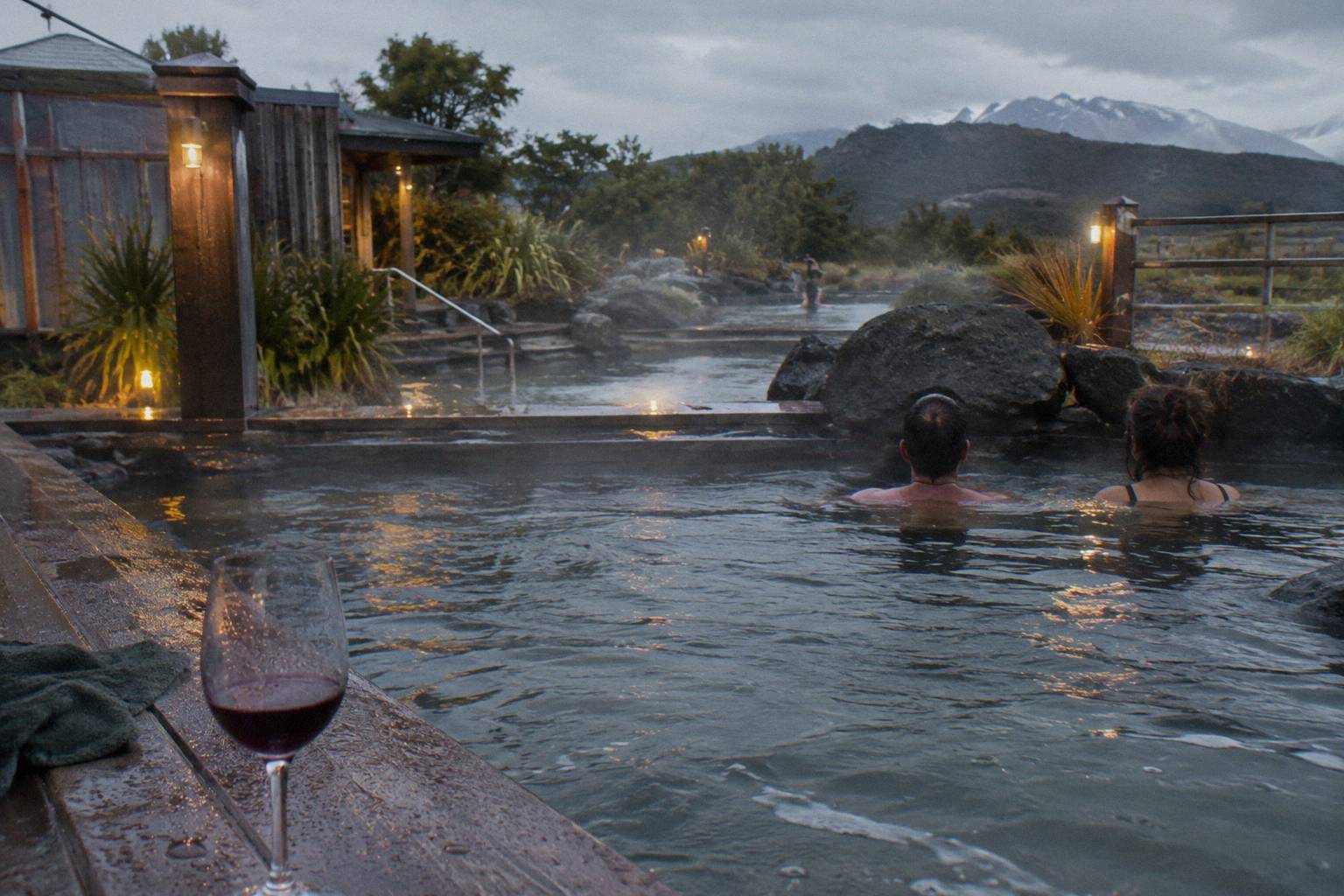
Are Thermal Pools The Same As Hot Springs?
A clear comparison of thermal pools and hot springs, and where Opuke Thermal Pools and Spa fits, with booking facts and prices.
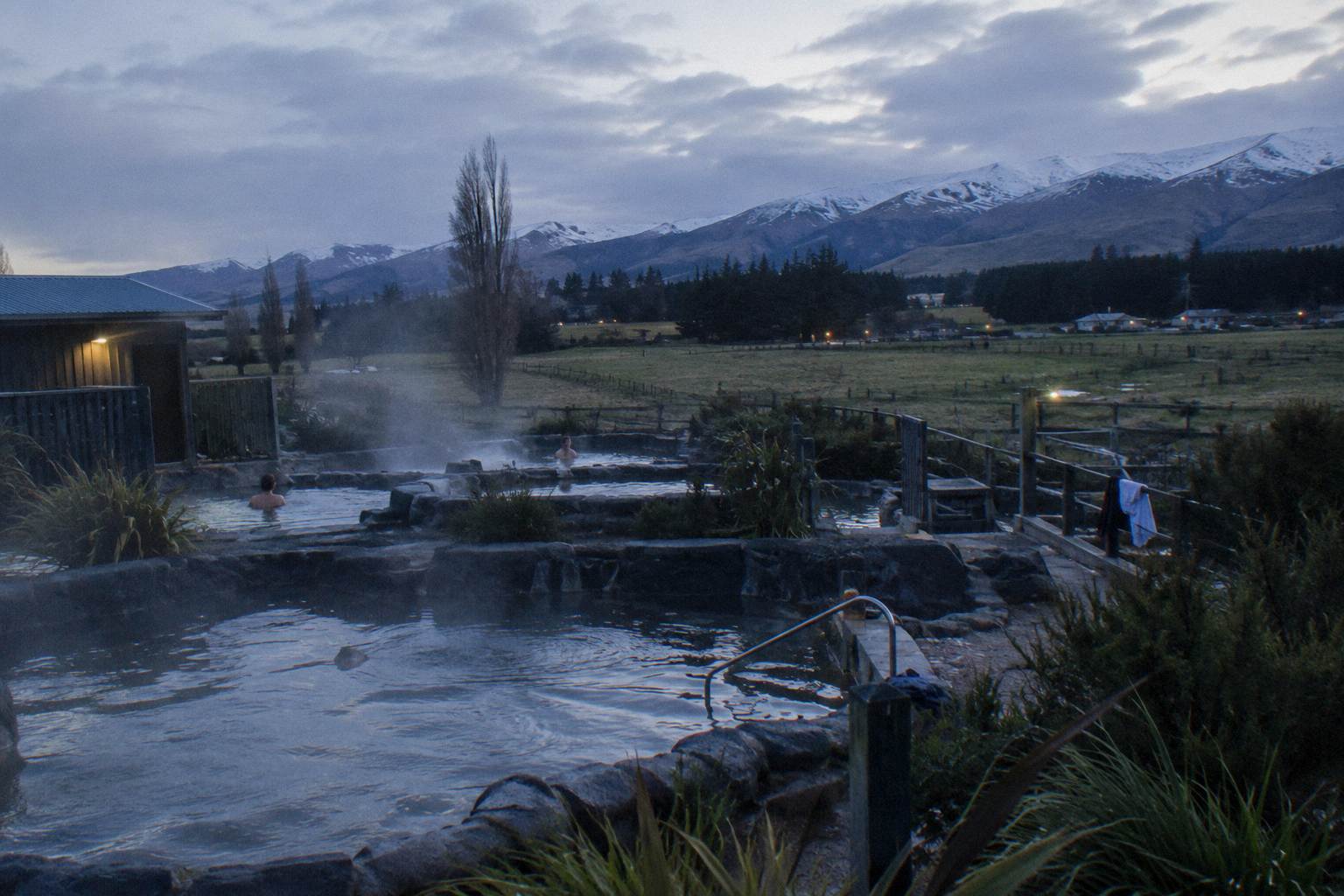
No, the two terms are not the same, even though both describe heated soaking pools. A hot spring is water heated by the ground itself, rising warm from underground. A thermal pool is any pool of warm or hot water, however it is heated, including water warmed by solar energy, heat pumps or boilers, and many thermal pools have no underground heat source at all. Opuke Thermal Pools and Spa at Methven is exactly that kind of facility.
The general reference definition of a hot spring is a spring produced by geothermally heated groundwater emerging from the earth's crust. That is the plain meaning of the term: the heat comes from below, and the water typically rises on its own. New Zealand has genuine examples of these, and some of the country's best known pool complexes, Hanmer Springs among them, are built around that underground heat and describe their water in those words.
A thermal pool, by contrast, is defined by temperature rather than by origin. The phrase covers any bathing pool kept warm for soaking, from pools filled and heated mechanically to those fed by naturally warm water. The word "thermal" tells you the water is hot. It does not tell you why the water is hot. That distinction is easy to miss when you are scrolling through options in Canterbury, because marketing copy for pool venues often leans on cosy imagery that makes every warm pool feel like it came from the same geological story.
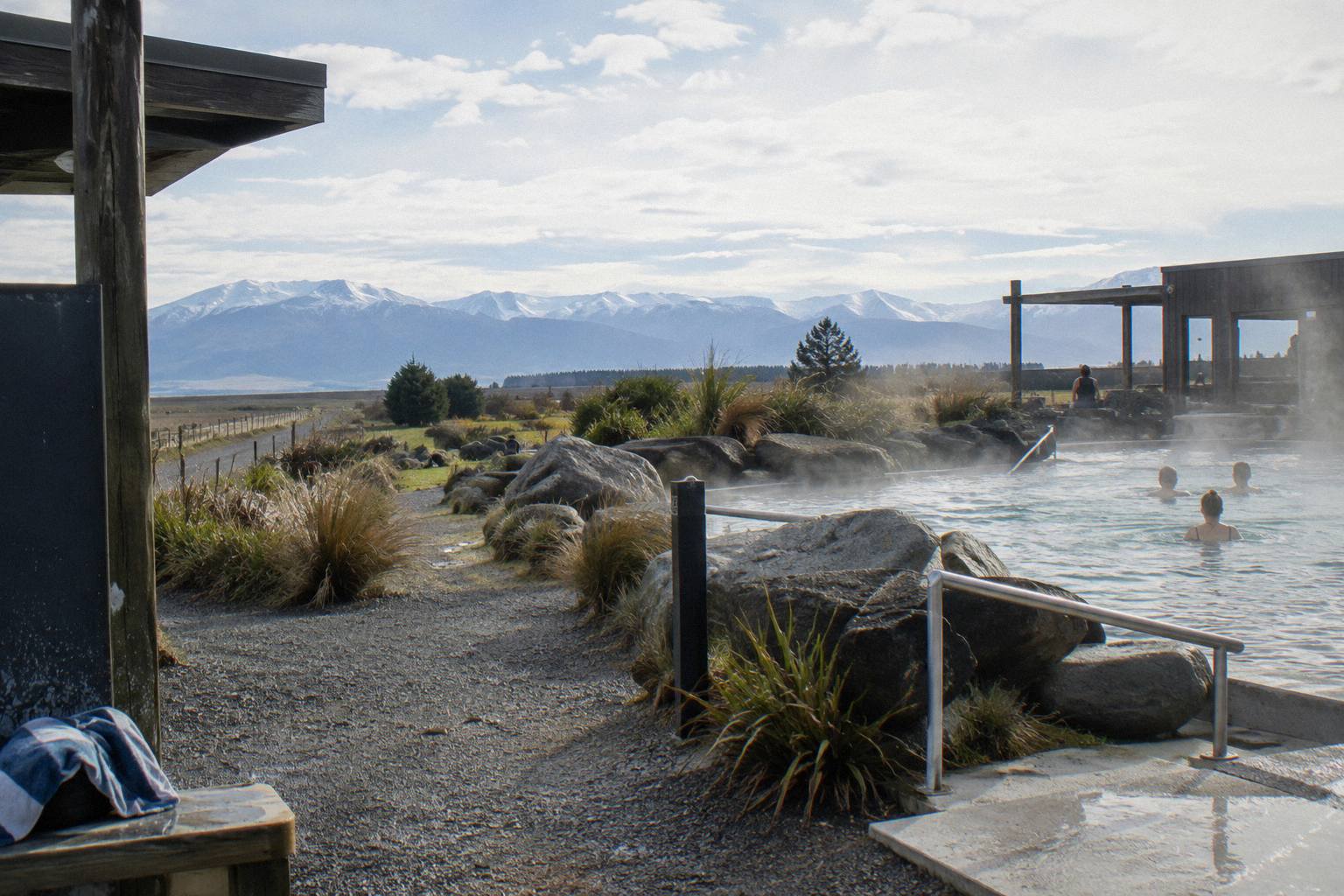
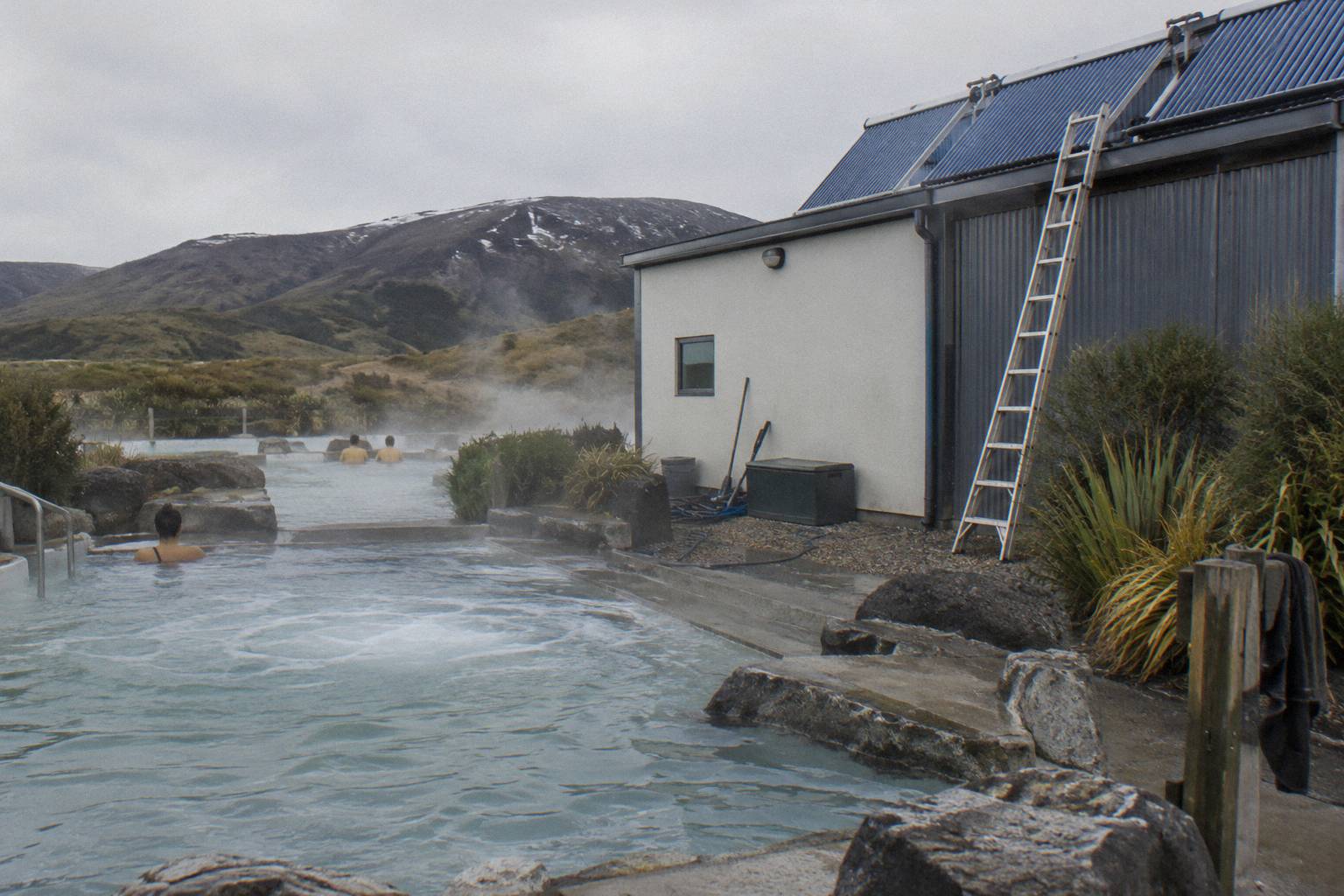
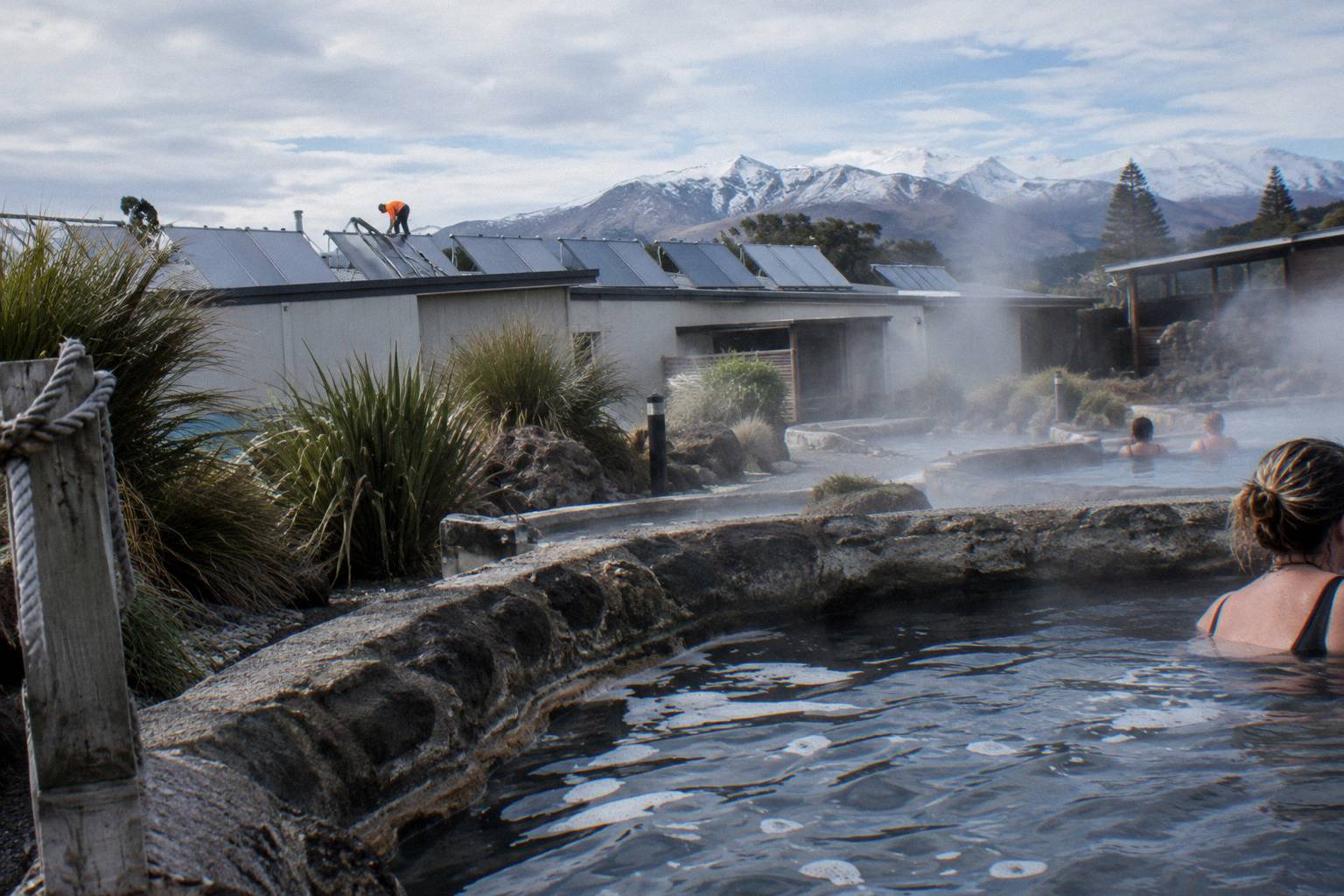
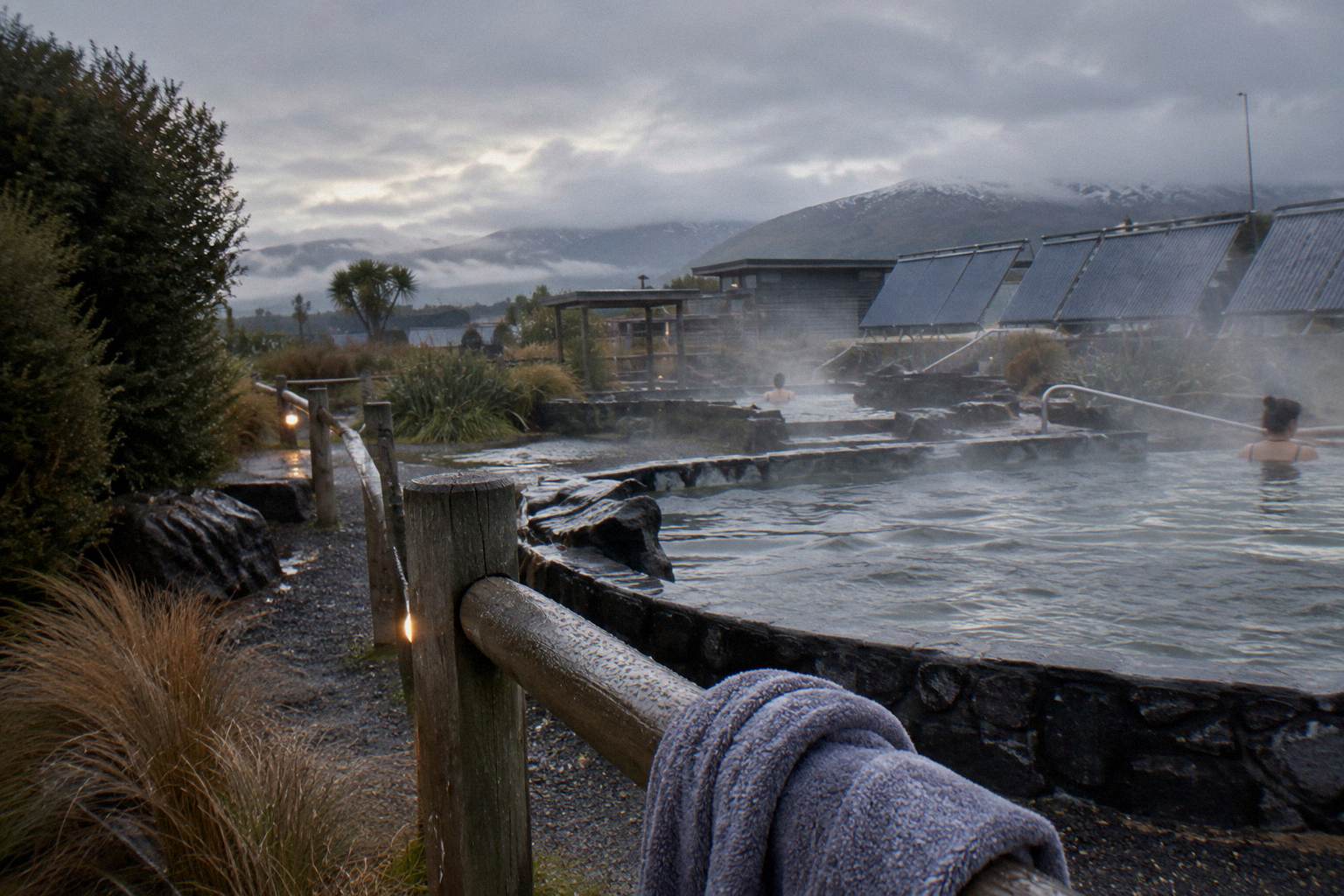
Opuke is a useful case study in why the distinction matters. According to Opuke's own description, its pools are "heated by solar energy and filled with glacial melt water sourced from the Rangitata River". The venue's FAQ adds that the water is chlorine and salt based, with the chlorine produced on site, and free of sulphur. So the heat comes from 480 solar thermal panels, described by Opuke as the largest system of its kind in New Zealand, and the water comes from a river carrying melt water down from the Southern Alps. Nothing about that involves underground heat. It is a purpose-built thermal pool facility, opened in November 2021, and it does not need a geological story to be worth visiting.
One more framing point helps before the detail. Neither category is the "real" one. A geothermal complex delivers water with the character the ground gives it, at temperatures the ground chooses, often with a sulphur smell in some pools. A purpose-built thermal pool delivers treated water at set temperatures in a venue designed around sessions, food and changing facilities. Travellers who know which experience they are buying tend to be happy with either. Travellers who booked one expecting the other are the ones who write disappointed reviews, and the difference is nearly always a vocabulary gap rather than a quality problem.
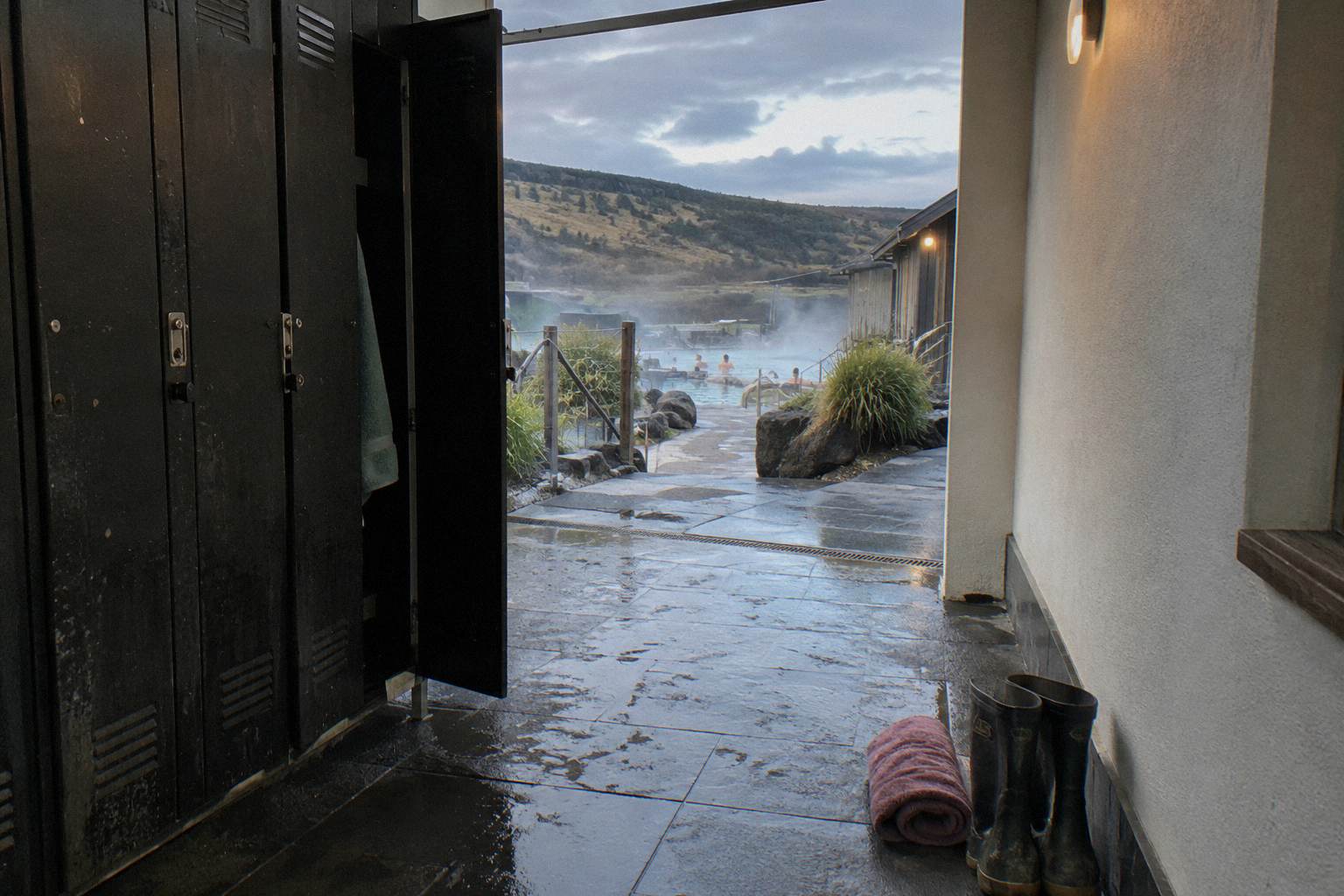
If that comparison has you weighing which kind of soak to book, these three Methven-area options are a workable shortlist:
What Actually Heats Each Kind Of Pool?
A hot spring is heated by the earth: groundwater moves close to hot rock, warms, and rises back to the surface. A solar-heated thermal pool such as Opuke is heated from above: solar panels warm river water held in built pools. Water chemistry differs too. Hanmer's sulphur pools add no chlorine, while Opuke treats its own river water on site, and Tekapo filters and heats an underground-sourced supply it says is not geothermal.
The mechanics are worth a moment because they explain most of the practical differences you notice at the venue. Geothermal water arrives warm without human help, so a complex built on it mainly shapes and stores what the ground already provides. Hanmer Springs describes its thermal pools in its own words as "Pure geothermal goodness", with sulphur pools where "no chlorine added" and the venue lets "the geothermal energy do the rest". The pool temperatures on its page range from 35 °C up to 42 °C.
Tekapo Springs sits in an interesting middle position that proves the terms are not tidy. Its FAQ says the venue is "not geothermal", and describes a pure underground source near Lake Tekapo that is filtered and then heated. It markets three hot pools at 36.5 °C, 37.5 °C and 38.5 °C, the last of them adults only. So a venue can draw on underground water, heat it further, and still be careful not to call itself geothermal. Language at pool venues is chosen precisely, and reading it closely tells you what you are actually soaking in.
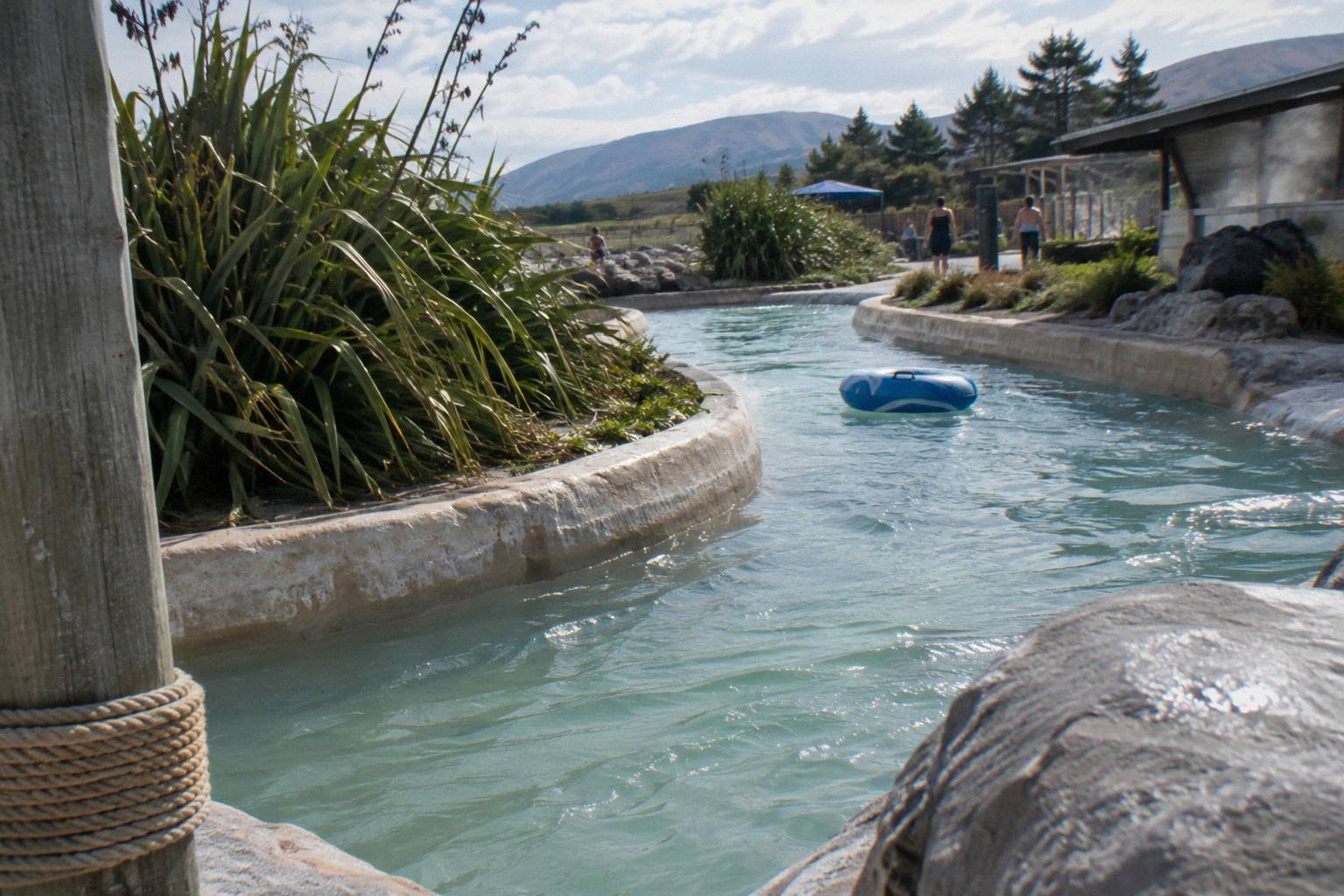
Opuke's answer to the heating question is the most distinct of the three. Opuke says its pools are heated by solar energy and filled with glacial melt water sourced from the Rangitata River, and that the water is chlorine and salt based, with chlorine produced on site and no sulphur. Pool temperatures are published by Opuke: Discovery sits around 36 °C with its lazy river at 36 °C and its starlit cave at 37 °C, Tranquility is 38 °C, and the private Serenity tubs reach up to about 41 °C. The smell-free water and the controlled temperatures come directly from that heating and treatment setup.
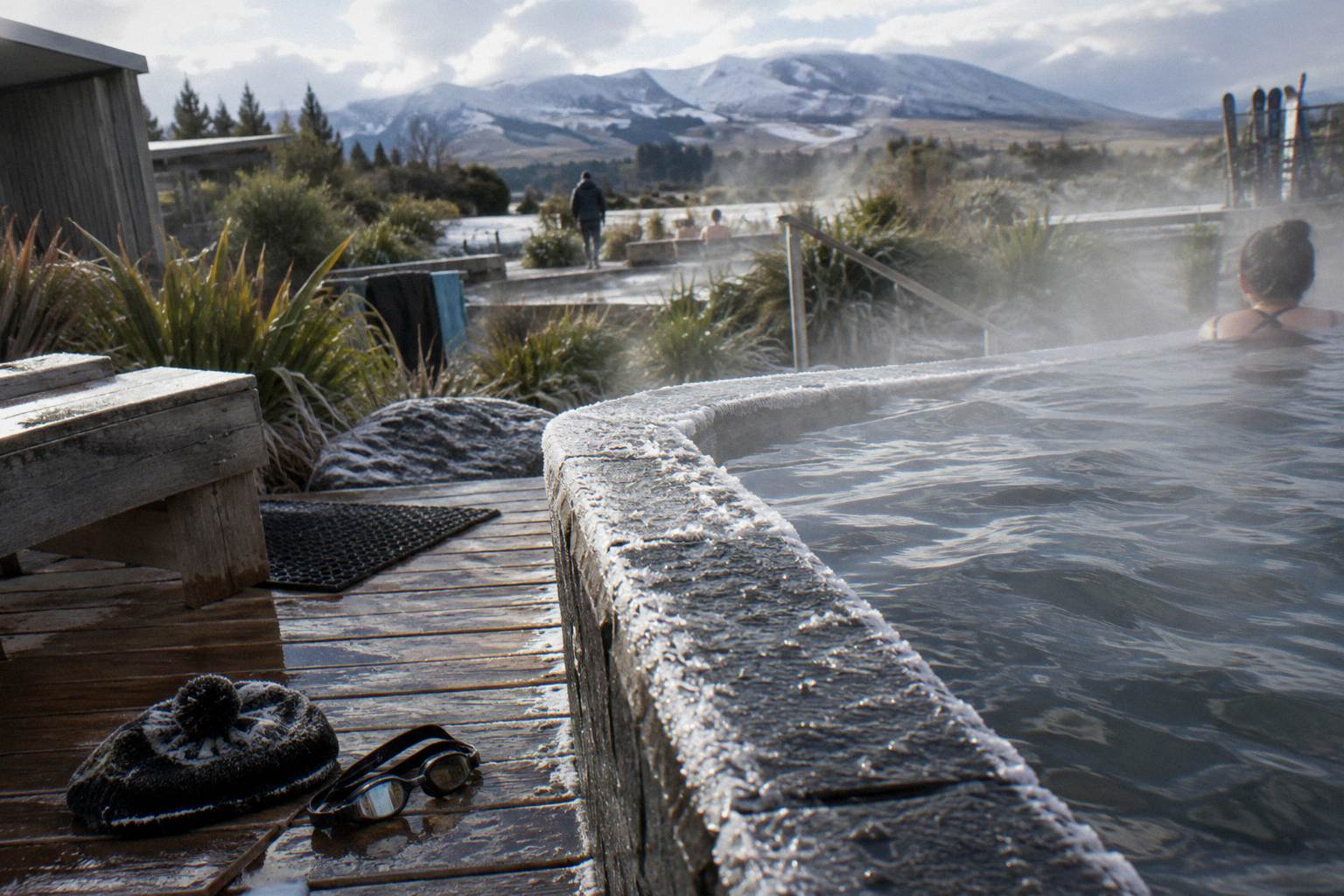
That consistency has a quiet practical upside worth naming. Water held at a set point stays at that set point across the whole session and across the whole year, because the heat source does not vary with weather, seasons or ground conditions. A two-hour Discovery session in midwinter is the same 36 °C it is at the height of summer, and the Tranquility pools hold their 38 °C whether the sun is on the panels or not. Visitors coming from a country where open-air winter soaking sounds punishing can treat that as a planning fact rather than a hope.
That heating story is covered in more depth in how the Methven hot pools are heated, which walks through the solar system and the water source in detail.
How Do The Three Venues Describe Their Water?
Each of the three big Canterbury-region pool venues characterises its water differently, and each backs that description with its own published figures. Hanmer calls its water geothermal and lists pools from 35 °C to 42 °C. Tekapo says its supply is not geothermal, drawn from underground, filtered and heated, with three hot pools from 36.5 °C to 38.5 °C. Opuke says its water is solar heated, river sourced, chlorine and salt based, with pools from about 36 °C to about 41 °C.
The clearest way to see the differences is side by side. The table below uses only what each venue says on its own pages, in its own figures, with nothing added. Prices shown are each venue's own gate prices in New Zealand dollars, attributed to each venue.
| Venue | Its own words on the water | Published pool temperatures | Entry price at its own gate |
|---|---|---|---|
| Opuke (Methven) | Heated by solar energy, filled with glacial melt water from the Rangitata River; chlorine and salt based, chlorine made on site, no sulphur | Discovery about 36 °C (cave 37 °C), Tranquility 38 °C, Serenity tubs up to about 41 °C | Opuke lists an adult Discovery two-hour ticket at NZ$34 |
| Hanmer Springs | "Pure geothermal goodness"; sulphur pools with no chlorine added | Pools from 35 °C to 42 °C, sulphur pools 42 °C, adults only 37 °C, one freshwater plunge 10 °C | Adult single entry NZ$40 online saver per its pricing page |
| Tekapo Springs | "Not geothermal"; pure underground source near Lake Tekapo, filtered and heated | Three hot pools at 36.5 °C, 37.5 °C and 38.5 °C, cooler pools 28 to 32 °C | Adult all day hot pools pass NZ$42 per its prices page |
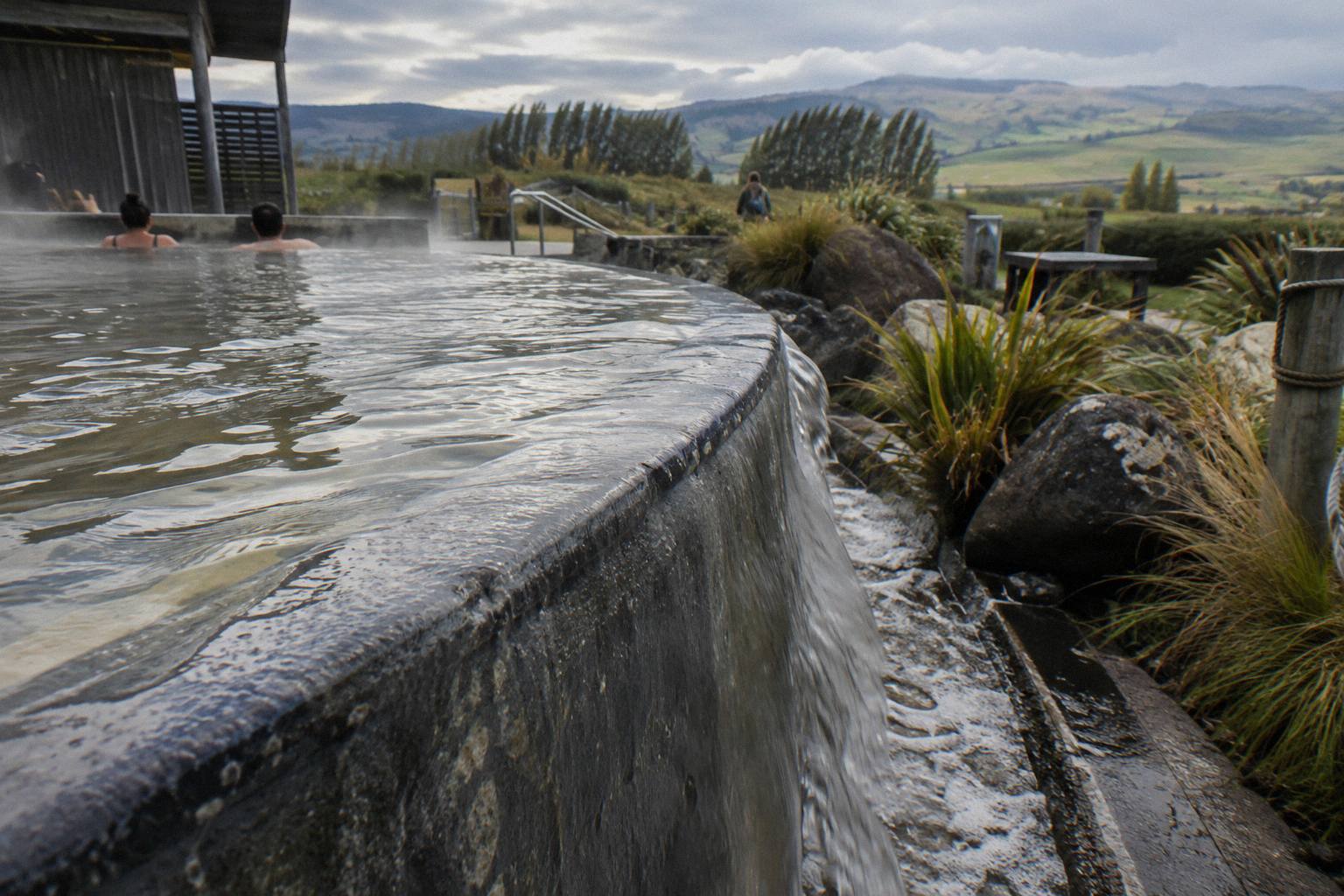
A few things follow from that table. None of the three venues is trying to hide anything; they simply have different water stories, and each states its own plainly. Hanmer leans into its underground heat and the character of its sulphur pools. Tekapo is precise that its source is underground but not geothermal in the strict sense. Opuke is upfront that its heat is solar and its water is treated river water, which is exactly why the water carries no sulphur smell and why temperatures sit at chosen set points rather than varying with the ground.
Notice too that the three price structures are not directly comparable, and should not be forced into one number. Hanmer's entry is a single-visit pass in two tiers, online saver and flexi. Tekapo sells an all-day hot pools pass with an optional steam, sauna and plunge upgrade at NZ$15. Opuke sells timed sessions of two or four hours, which is a different product shape even before price enters the comparison. Anyone building a budget from these figures should compare like with like: hours of access, what is included, and whether food and towel provision is bundled or extra at each venue.
For a fuller head to head on facilities, sessions and prices, the Opuke and Hanmer Springs comparison breaks down both venues line by line, and the wider Canterbury hot pools day trip guide covers how to reach each of them from the city.
What Difference Does It Make When You Book?
The heating method mostly changes expectations, not enjoyment: a geothermal complex smells of sulphur in places and offers water at nature's temperatures, while a solar-heated thermal pool offers consistent set temperatures, treated water and modern changing facilities built as one integrated venue. Practical booking differences follow from that: Opuke sells two-hour and four-hour capacity-limited sessions, while Hanmer and Tekapo sell all-day-style entries, so timing matters more at Opuke.
Opuke's session model is the biggest practical consequence. You choose a two-hour or four-hour session, the time includes check-in, sessions are capacity limited, and Opuke recommends advance booking because sessions often sell out. That is a different rhythm from turning up to a large all-day pool complex and staying as long as you like within opening hours. It also means the two venues suit different day plans: an Opuke session pairs naturally with a balloon flight, a jet boat ride or lunch in Methven, while an all-day entry suits a slow afternoon with no other agenda.
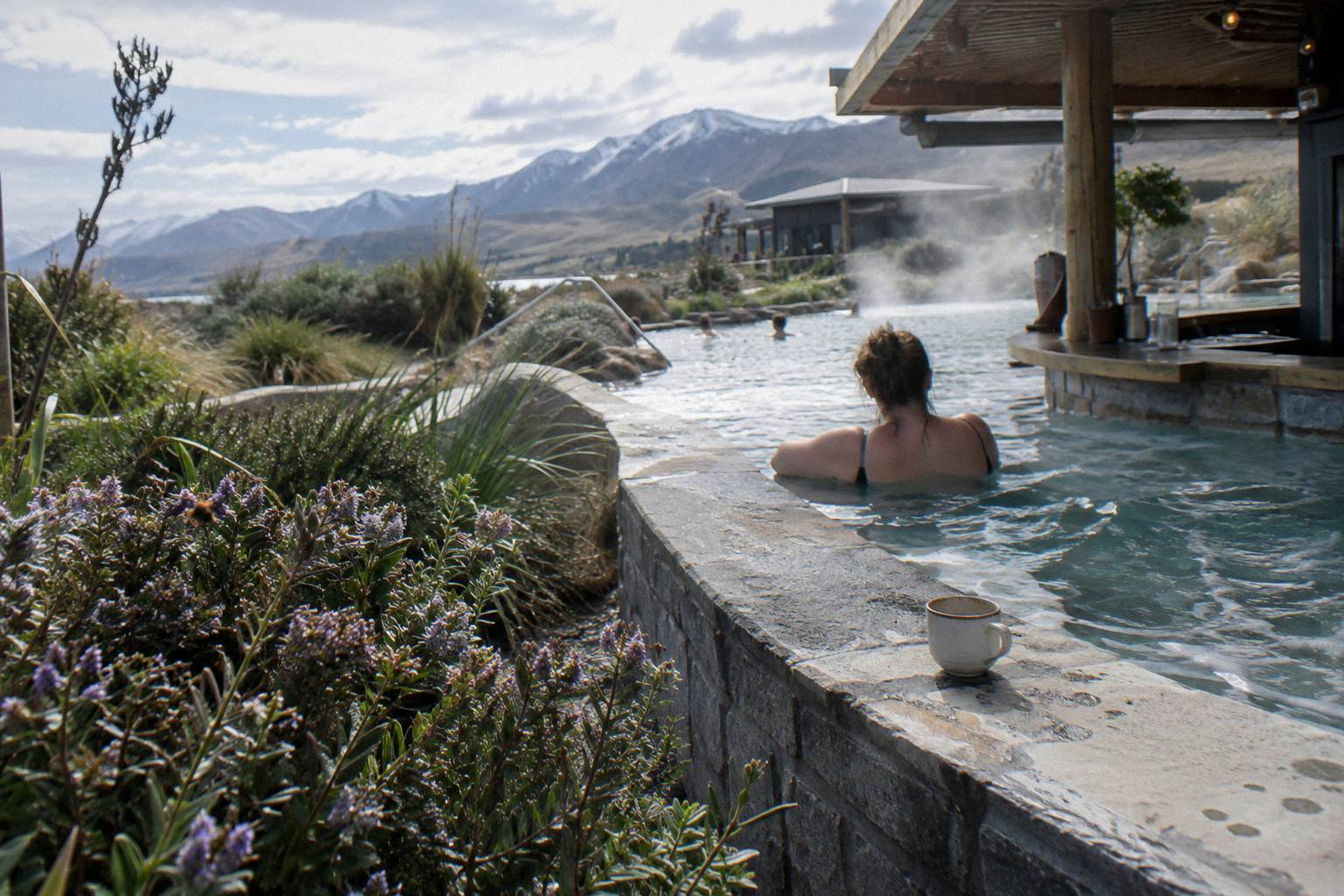
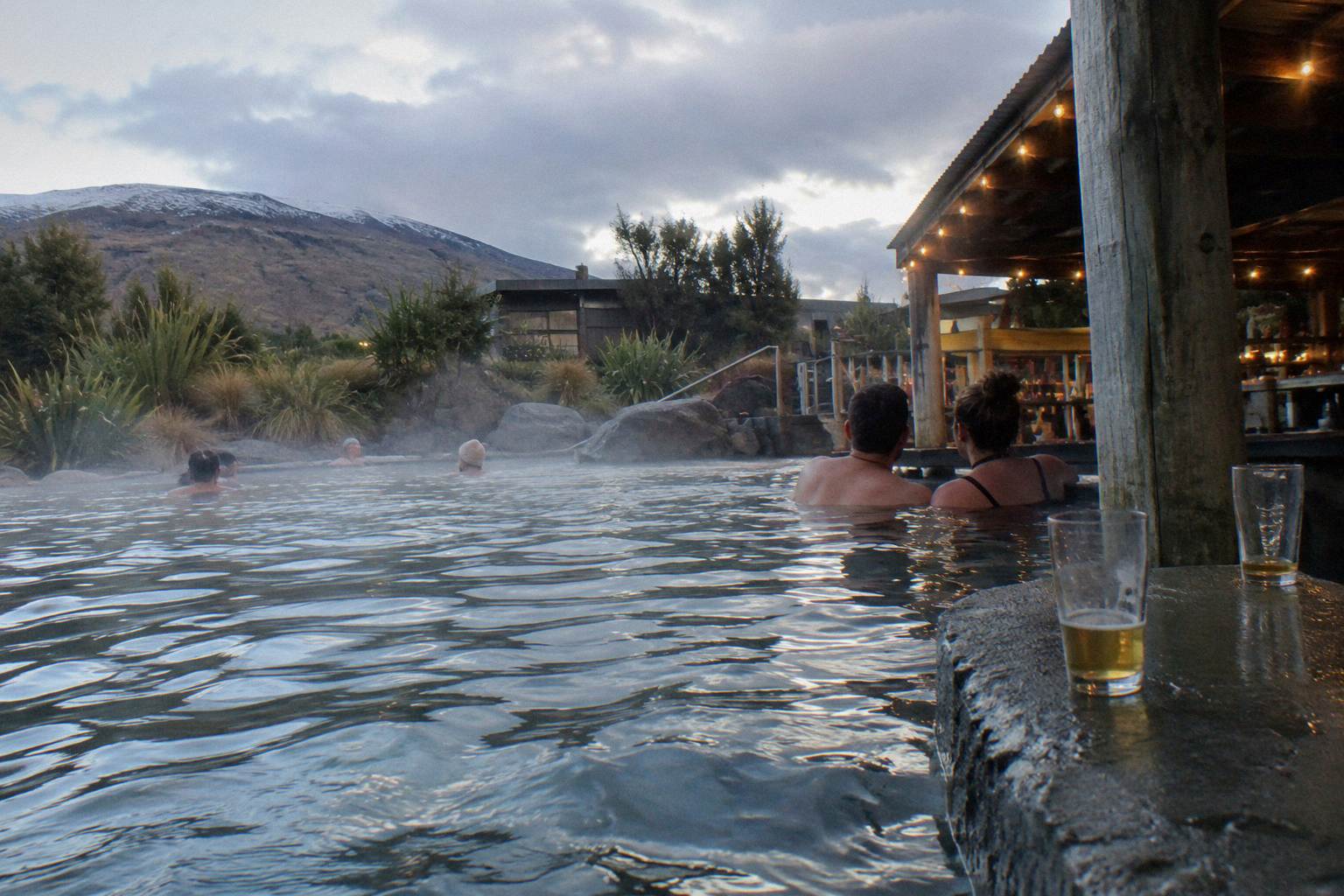
The second consequence is what is included. Opuke's sessions come with a complimentary locker, and robe and towel are free with Tranquility, Serenity and the Day Spa. Discovery guests can hire a towel. Bring-your-own food is not allowed, though a non-glass water bottle is fine, and the venue is cashless, taking card or Paywave only. Alcohol at the Tranquility swim-up bar is limited to two drinks per guest per two-hour session, which is Opuke's own FAQ wording. None of that is better or worse than an all-day venue; it is simply a different operating model, and knowing it prevents surprises at the gate.
The third consequence is cancellation. Every Opuke booking on the booking page carries free cancellation up to 24 hours before the start, and Opuke's own terms allow a refund only when notified at least 24 hours ahead, with rescheduling at discretion inside that window. Session-based venues almost always run tighter cancellation rules than gate-entry venues, so if your travel dates are loose, book the session you can still move rather than the one you would hate to lose.
The fourth consequence is how each venue fits a wider itinerary. Because an Opuke session is a fixed two-hour or four-hour block, it slots cleanly into a day built around other Methven activities: a morning balloon flight, a jet boat ride at the Rakaia Gorge, or lunch in the village before an afternoon soak. All-day entry works the other way around, becoming the spine of the day with everything else arranged loosely around it. Neither approach is superior. It comes down to whether your travel style is scheduled or drift, and being clear about that before booking saves reshuffling plans later.
| What you compare | A hot spring complex (Hanmer or Tekapo style) | A purpose-built thermal pool (Opuke style) |
|---|---|---|
| How the water is heated | Underground heat, in Hanmer's own words | Solar panels warming Rangitata River melt water |
| Water character | Sulphur pools with no chlorine added at Hanmer | Chlorine and salt based, made on site, no sulphur |
| Entry model | All-day style single entry | Capacity-limited 2 or 4 hour sessions |
| Temperatures | 35 °C to 42 °C at Hanmer; 36.5 °C to 38.5 °C at Tekapo | About 36 °C to about 41 °C across the three zones |
Which Opuke Session Fits Which Kind Of Visitor?
Adults fit the Tranquility Pools Adults-Only Session, an 18-and-over two-hour session from US$38 per person. For families there is the Discovery Pools Family Session, also two hours, from US$19 per person. Visitors from Christchurch without a car fit the scenic Canterbury day tour, rated 4.8 across 12 reviews, from US$107.93 per person.
Listing prices on the booking page are in US dollars, so treat those figures as booking-page prices and Opuke's own NZ$ gate prices as separate numbers that are never converted on Opuke Thermal Pools sessions and day trips in Methven. The adults-only Tranquility session runs two hours in the 38 °C interconnected pools, with the swim-up bar, a pool cave, a cold plunge and floating-basket dining on offer, and it includes entry to the Discovery Pools except during the 7pm and 8pm sessions. Adults only means 18 and over, with ID accepted as an NZ driver licence, passport or Kiwi Access Card if you look under 25.
The family session covers the Discovery zone: a lazy river at 36 °C, the starlit Matariki cave at 37 °C, a cold plunge, a jump pool, the Aqua Play zone and observation pools. Opuke's gate prices list children 3 to 15 at NZ$23 for a two-hour ticket, with under 3s free with a paying adult, and the booking page shows the session from US$19 per person. Sessions are wheelchair accessible, and Opuke has one accessible pool in Discovery and one in Tranquility, an accessible changing room, and an aqua wheelchair available. Families with younger children should note Opuke's rules: under 14s need a responsible caregiver aged 16 or over, under 5s must stay within arm's reach, and under 3s need a swim nappy.
For travellers based in Christchurch, the scenic Canterbury day tour bundles transport and a soak: private air-conditioned vehicle with a local driver-guide, bottled water, comfort stops, admission to a two-hour Discovery session and a stop at the Rakaia Gorge Walkway, running 6 to 8 hours from pickup to drop-off. Meals, drinks, spa treatments and gratuities are not included, and a Tranquility or Serenity upgrade is a paid add-on, with the fee shown on the booking page, so ask when you book. It is rated 4.8 across 12 reviews and, like every option on the booking page, carries free cancellation up to 24 hours before the start. The day tour's full details cover the itinerary, or you can check availability directly.
A short match-up by traveller type rounds the choice off. Couples celebrating something fit Tranquility, whose swim-up bar and floating-basket dining are built for exactly that. Parents with children of mixed ages fit Discovery, where the jump pool and Aqua Play zone keep the energetic ones busy while the observation pools suit the ones who just want to float. Solo travellers who want transport handled end to end fit the day tour. And anyone wanting privacy can book one of Opuke's five Serenity private tubs direct with the venue on its own Serenity page, at NZ$242 for two adults for two hours including a sauna, Tranquility and Discovery access when in session, and a complimentary bread platter on arrival.
What Trips People Up When Comparing The Two?
The most common mistakes are assuming every warm pool in New Zealand is geothermal, expecting the same smell and water character everywhere, mixing up New Zealand dollar gate prices with US dollar booking-page prices, and turning up to Opuke expecting all-day entry rather than a timed session. Each of these is avoidable with one or two checks before you commit, and none of them is a reason to skip either kind of venue.
The first trip-up is vocabulary-driven. Visitors read "thermal" and picture bubbling ground water, then feel short-changed when they learn Opuke's heat comes from solar panels. The plain framing is that Opuke is not heated by the ground, and says so itself, and that its water, glacial melt water from the Rangitata River, has its own story worth knowing. If a geothermal soak is specifically what you want, Hanmer Springs is the venue in the region whose own words promise it.
The second trip-up is money. Opuke's gate prices are New Zealand dollars from Opuke's own price list, while the booking page shows from-prices in US dollars. Never treat one as a conversion of the other. The third trip-up is timing: Opuke sessions are capacity limited, often sell out, and the two-hour window includes check-in, so plan to arrive with time to spare. The fourth is age rules: Tranquility and Serenity are strictly 18 and over, and Discovery children's rules are specific about caregivers and swim nappies.
A short checklist of questions to answer before you book closes the gap. Which zone, Discovery for families or Tranquility for adults only, and does everyone in your group meet its age rule? Which session length, two hours or four, and does the four-hour version's extra cost suit how long you actually soak? What is included, remembering that food and drink are not in any session, that robes and towels come with Tranquility but not Discovery, and that a non-glass water bottle is the one thing you can bring? And finally, does your schedule still allow free cancellation at 24 hours, which is the window every option on the booking page honours?
Common Questions About Thermal Pools And Hot Springs
Are Thermal Pools The Same As Hot Springs?
No. A hot spring is water heated underground by the earth and rising warm on its own. A thermal pool is any warm soaking pool, however it is heated. Opuke at Methven is a thermal pool venue heated by solar energy and filled with glacial melt water from the Rangitata River.
Is Opuke Geothermal?
No. Opuke says its pools are heated by solar energy and filled with glacial melt water sourced from the Rangitata River. The water is chlorine and salt based, with the chlorine produced on site, and free of sulphur.
Which Canterbury Pool Venues Are Built On Hot Springs?
Hanmer Springs describes its thermal pools as geothermal in its own words, with sulphur pools where no chlorine is added. Tekapo Springs says its supply is not geothermal, drawing underground water near Lake Tekapo that it filters and heats.
Do The Different Water Types Smell Or Feel Different?
They can. Hanmer's sulphur pools carry the character of geothermal water, while Opuke's treated river water is free of sulphur and held at chosen set temperatures from about 36 °C to about 41 °C across its three zones.
Does The Heating Method Change How I Book?
Not the heating itself, but the venue model does. Opuke sells capacity-limited two-hour and four-hour sessions that often sell out, while Hanmer and Tekapo sell all-day-style entries. Free cancellation up to 24 hours applies to every Opuke option on the booking page.
What Does An Opuke Session Cost?
Opuke lists an adult Discovery two-hour ticket at NZ$34 and a Tranquility two-hour adult ticket at NZ$69 at its own gate. On the booking page, the Discovery family session starts from US$19 per person and the adults-only Tranquility session from US$38 per person.